1. Lightweight and efficient, suitable for shallow exploration
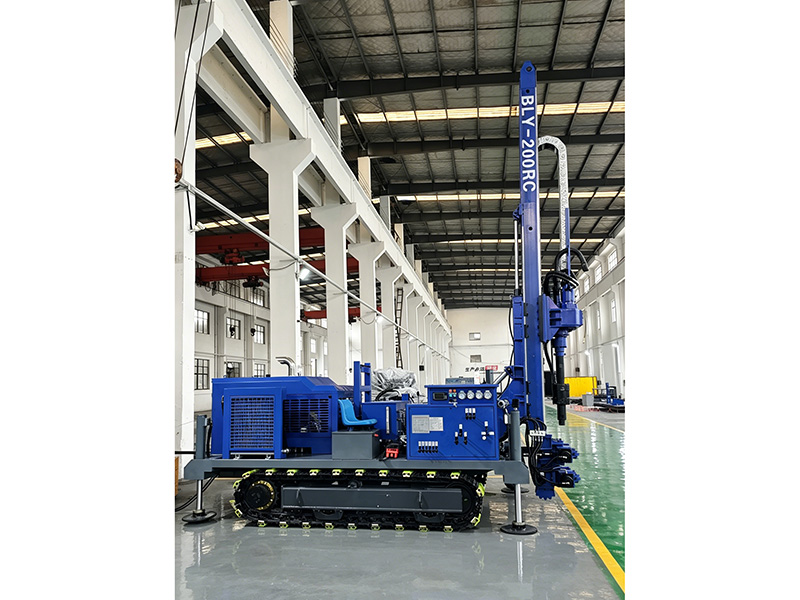
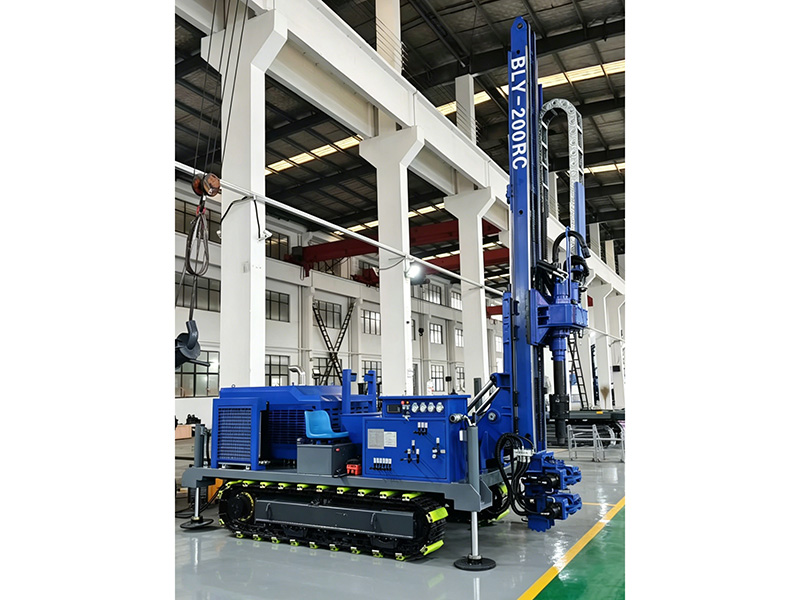
The whole machine weighs only 6 tons, which is over 60% lighter than a 700 meter drilling rig, making transportation, transfer, and mountain climbing more convenient.
The reverse circulation sampling speed is fast, the rock powder is pure, and there is no mud pollution, making it suitable for rapid grade judgment of gold mines, non-ferrous metals, and other minerals.
2. Fully hydraulic control, simple and reliable
Mast lifting, rotation, feeding, walking, and leveling are all hydraulic, making operation effortless and with a low failure rate.
The hydraulic system adopts imported key components, with strong stability and simple maintenance.
3. Track self-propelled, adaptable to complex terrain
Steel track+30 ° climbing, suitable for rugged roads in mountains, hills, and mining areas, and can be moved without the need for a crane.
4. Multi functional compatibility
It can be used for RC reverse circulation sampling, pneumatic down the hole hammer drilling, hydrological monitoring holes, and shallow water wells in one machine.
Can be paired with cyclone separators and sample collectors to achieve dust-free and environmentally friendly sampling.
5. Good economy
Low fuel consumption, low maintenance costs, and low shift costs, suitable for small and medium-sized projects, surveys, and short-term exploration.
Lightweight: Small in size, light in weight, easy to transport, and easy to climb mountains.
Fast: Reverse circulation sampling is fast, efficient, and fast in judgment.
Province: Low fuel consumption, easy maintenance, and overall low cost.
Ling: Self propelled track, strong terrain adaptability, and flexible transition.
How to Choose the Right RC Drill Rig: Key Factors to Consider
Selecting the best RC drill rig involves carefully assessing your project’s unique requirements. Here are the crucial aspects to evaluate:
1. Understand Your Project Requirements
Purpose: Define whether you need the rig for mineral sampling, geotechnical surveys, environmental monitoring, or water well drilling.
Drilling Depth & Diameter: Determine the maximum depth and hole diameter required. RC rigs typically drill between 100 to 1,200 meters, with diameters ranging from 105 mm to over 800 mm depending on the model.
Ground Conditions: Analyze the geological makeup of your site. Hard rock formations require rigs with higher power and torque, while softer soils might allow for lighter, portable rigs.
2. Rig Specifications and Performance
Power Source: Most RC rigs use diesel engines (e.g., Cummins or Yuchai) with power ratings from 90 kW to over 260 kW. More powerful engines support deeper and harder drilling.
Drilling Speed and Torque: Look for rigs offering high rotary torque (up to 24,000 Nm) and variable rotary speeds to handle different rock types effectively.
Feed and Lifting Force: Ensure the rig has sufficient feed force (up to 13 tons) and lifting capacity (up to 57 tons) to manage drill pipes and rods efficiently.
Air Compressor Capacity: A high-capacity air compressor is essential for maintaining stable air pressure and effective cuttings removal.
3. Mobility and Site Accessibility
Chassis Type: Choose between crawler-mounted rigs for rough, uneven terrain and truck-mounted rigs for faster relocation on accessible roads.
Size and Weight: Portable rigs (around 10-12 tons) are ideal for small-scale or remote projects, while larger rigs (up to 23 tons) suit industrial-scale drilling.
Travel Speed and Gradeability: Consider rigs with adequate travel speeds (up to 35 km/h) and gradeability (around 21°) for site navigation.
4. Operational Efficiency and User-Friendliness
Fuel Efficiency: Opt for rigs with efficient engines and systems to reduce operating costs.
Automation and Control Systems: Advanced rigs may offer automatic rod changers and numerical control for enhanced precision and reduced labor.
Ease of Operation: User-friendly controls and safety features minimize training time and accident risks.
5. Maintenance and After-Sales Support
Spare Parts Availability: Choose manufacturers with reliable spare parts supply to minimize downtime.
Technical Support: Ensure your supplier offers comprehensive after-sales service, including maintenance, repairs, and operator training.
Durability: Look for rigs built with robust components suitable for harsh environments.







 Home
Products
Reverse Circulation Drill Rig
Bly-200rc Reverse Circulation Drill Rig
BLY-200RC Reverse Circulation Drill Rig
Home
Products
Reverse Circulation Drill Rig
Bly-200rc Reverse Circulation Drill Rig
BLY-200RC Reverse Circulation Drill Rig