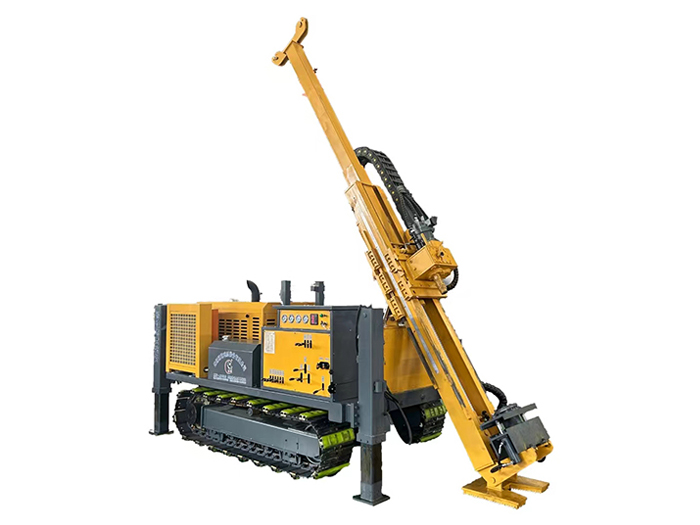
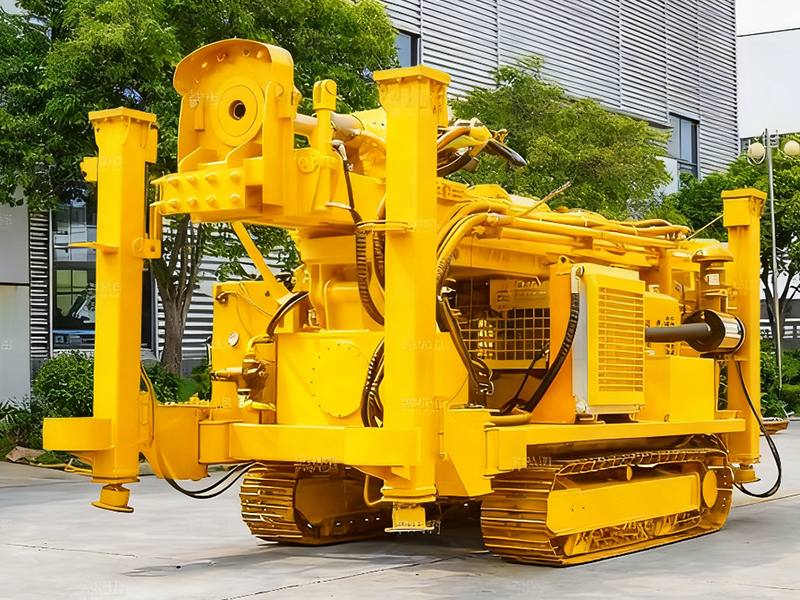
Soil sampling drills are core equipment for obtaining soil samples, playing a crucial role in geological exploration, soil analysis, environmental monitoring, agricultural research, and other fields. Whether understanding soil composition, assessing environmental quality, or guiding agricultural production, selecting the right soil sampling drill and using it correctly are the foundations for ensuring sample accuracy and work efficiency. This article will detail the types, usage methods, and price references of soil sampling drills to help you better understand this equipment.
Application Fields of Soil Sampling Drills
- Geological Exploration: By collecting soil samples at different depths, analyze stratum structure and mineral distribution to provide data support for resource exploration.
- Soil Analysis: Detect soil indicators such as pH value, nutrient content, and heavy metal pollution to evaluate soil quality and guide land improvement.
- Environmental Monitoring: Regularly collect soil samples to monitor pollutant migration, providing a basis for environmental protection and governance.
- Agricultural Research: Study the impact of different soil types on crop growth, optimize planting plans, and improve agricultural production efficiency.
Main Types and Applicable Scenarios of Soil Sampling Drills
Based on soil type, terrain conditions, and sampling requirements, soil sampling drills can be divided into multiple types, each suitable for different scenarios:
1. Rotary Drilling
Applicable Scenarios: Soft soils such as loose clay and sandy soil.
Working Principle: The soil sample is cut and brought to the surface through high-speed rotation of the drill bit, with high sampling efficiency, suitable for shallow-depth sampling.
2. DTH (Down-the-Hole) Drilling
Applicable Scenarios: Hard and fractured rock layers or dense soil.
Working Principle: Combines rotating tools with a pneumatic hammer to break rock through high-frequency impact while rotating to discharge slag, suitable for medium to deep hole sampling.
3. Top Hammer Drilling
Applicable Scenarios: Small-diameter drilling needs, such as mineral exploration or installing tie rods in rock.
Working Principle: The top hammering force is transmitted to the drill bit to break rock and form a borehole, with small sampling diameter but high precision.
4. Auger Drilling
Applicable Scenarios: Medium-hardness soils such as clay, clay sand, and gravel.
Working Principle: Uses a worm (helical blade) to directly transport excavated soil to the surface without additional slag discharge, simple to operate, and suitable for various soil types.
5. Core Drilling
Applicable Scenarios: Almost all soil types, including rock and loose soil.
Working Principle: Integral columnar samples (cores) are extracted through an internal core tube, preserving the original soil stratification structure, suitable for high-precision analysis.
6. Percussion Drilling
Applicable Scenarios: Hard rock or dense formations.
Working Principle: Relies on gravity or mechanical force to make the drill bit repeatedly impact the rock, breaking it to form a borehole, which can only be used vertically, suitable for hard rock sampling at specific depths.
7. Pipe Jacking Drilling
Applicable Scenarios: Horizontal pipeline installation or horizontal sampling.
Working Principle: Gradually pushes the pipe forward through impact and propulsive force, mainly used in trenchless engineering to reduce surface damage.
Correct Usage Method of Soil Sampling Drills
Using a soil sampling drill requires following standard steps to ensure safety and sample quality:
1. Preparation Work
- Select the appropriate drill type based on soil type (e.g., clay, rock), sampling depth, and terrain;
- Determine sampling points, depth, and frequency, and mark the sampling points;
- Prepare auxiliary tools: sampling labels, record books, gloves, safety glasses, cleaning tools, etc.;
- Check the equipment status: ensure drill pipes and bits are not worn, and the engine (if it is a motorized drill) has sufficient fuel and oil.
2. Starting the Equipment
- For motorized drills, turn on the throttle switch, slowly pull the rope to start the engine, and start operation after the speed stabilizes;
- For electric drills, check the power connection and confirm the switch is normal.
3. Drilling and Sampling
- Align the drill vertically with the sampling point to avoid tilting affecting sample representativeness;
- Apply pressure slowly, control the drilling speed, and avoid excessive force causing drill pipe bending or sample disturbance;
- After drilling to a certain depth (set according to requirements, such as 20cm or 50cm), stop drilling, take out the inner tube or core tube, and put the sample into a marked container.
4. Pulling Out the Drill Pipe
- After sampling, start the pulling device and recover the drill pipe at a constant speed to avoid equipment damage caused by rapid pulling;
- Clean the residual soil on the drill pipe and core tube, check for component wear, and prepare for the next use.
5. Precautions
- Wear protective equipment (gloves, goggles, work clothes) throughout to avoid soil splashing or equipment injury;
- Prohibit operation in strong wind, thunderstorms, high temperature, or humid environments to ensure operational safety;
- Clean the equipment in time after use, check the wear of bits and drill pipes, replace vulnerable parts if necessary, and extend equipment life.
Price Reference of Soil Sampling Drills
The price of soil sampling drills is greatly affected by type, function, power mode (manual/motorized/electric), etc.:
- Manual Small Drills: Suitable for shallow-depth, small-scale sampling, usually priced from several hundred to several thousand yuan;
- Motorized/Electric Drills: More powerful, capable of handling complex soil and deeper sampling, with prices ranging from several thousand to tens of thousands of yuan;
- Professional Large Drills: For deep sampling or hard rock environments, with higher configuration, prices can reach tens of thousands of yuan or more.
The specific price needs to be determined according to actual requirements (such as sampling depth, soil type, automation level). It is recommended to choose cost-effective equipment based on the usage scenario.
Conclusion
Soil sampling drills are important tools for soil research and engineering operations. Selecting the appropriate type and mastering the correct usage method can effectively improve sampling efficiency and sample quality. Whether for agricultural research, environmental monitoring, or geological exploration, rationally selecting equipment according to soil characteristics and needs is the key to ensuring smooth work. It is hoped that this article can provide practical reference for you to understand soil sampling drills."