What Is The Difference Between RC And DD Drilling
Release time:2026-11-02
Visits:235
Imagine identifying a layer cake buried 500 meters underground. You could suck up crumbs with a straw or carefully extract a perfect slice. In mineral exploration, drilling isn't just about making holes; it is about "recovery"—getting rock samples back to the surface to see what lies beneath.
The specific drilling rig determines the result. Reverse Circulation acts like a hammer, shattering rock into tiny "chips" resembling sand. Conversely, Diamond Drilling works like an industrial apple corer, cutting solid cylinders to preserve the stone's exact structure.
Why use both? Industry practice balances cost against data quality. RC offers a fast overview, while diamond cores provide high-resolution detail. The difference between RC and DD drilling explains how miners map the unknown.
Reverse Circulation: The Industrial Hammer That Turns Rock Into Colorful Sand
Think of an
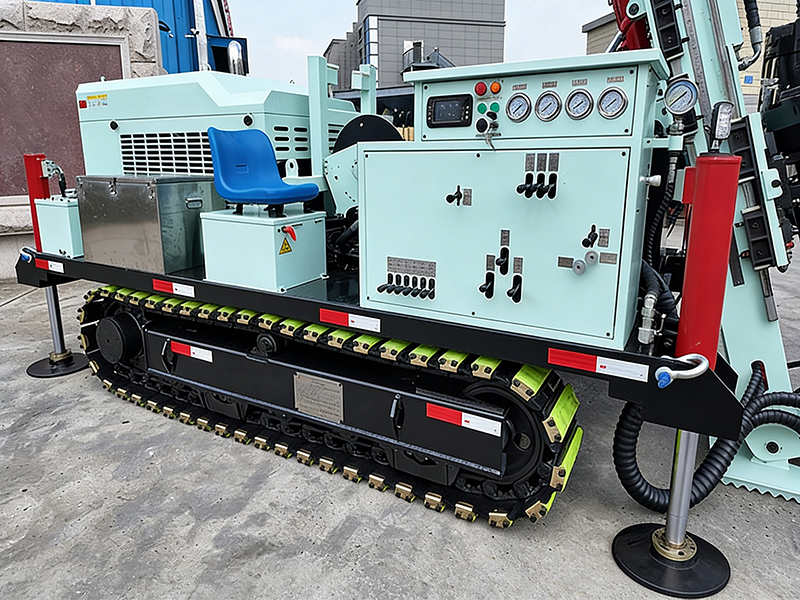
RC drilling machine as a massive, industrial jackhammer combined with a high-powered vacuum. Instead of gently cutting the ground, this method uses a pneumatic (air-powered) hammer to pummel solid rock into dust and small chips. It is loud, aggressive, and incredibly efficient at chewing through the earth to find mineral deposits quickly.
Getting those rock chips to the surface presents a unique challenge: how do you keep them from mixing with the dirt on the walls of the hole as they travel up? The solution is a clever "straw within a straw" design. Compressed air blows down the outer tube to power the hammer, while the inner tube acts as a private highway for the rock chips to travel up to the surface. By isolating the sample inside that center tube, geologists ensure the rock they test is exactly the rock the hammer just broke.
The entire process is a rapid loop of destruction and collection:
Smash: The percussion hammer pulverizes the rock at the very bottom of the hole.
Lift: Air pressure forces the debris up the protected inner tube (the dual tube drilling system mechanics).
Collect: The rock "flour" shoots out into a collection bin, ready to be bagged and tagged.
What you end up with looks like bags of colorful coarse sand rather than solid rock. Because this method is fast and provides chemically accurate dust, the advantages of reverse circulation drilling make it the top choice for "scouting" missions. However, if you need to see exactly how the rock layers fit together structurally, you need a tool that acts less like a hammer and more like a precise scalpel.
Diamond Core Drilling: The 'Stone Sausage' Maker That Tells Earth’s Secret History
While RC drilling acts like a blunt instrument, a core drilling rig functions more like an industrial apple corer. Instead of pulverizing the rock, this method uses a rotating bit encrusted with industrial-grade diamonds—the hardest material on earth—to grind a circular channel into the ground. This leaves a solid cylinder of rock, known as a "core," sitting safely inside the hollow center of the drill pipe. It is a slower, gentler process designed to preserve the rock intact rather than destroy it.
Retrieving that fragile cylinder from hundreds of meters deep requires a clever trick called the wireline core recovery process. In older drilling days, crews had to pull every meter of heavy steel pipe out of the ground just to empty the sample barrel. Modern rigs use a specialized inner tube that acts like an elevator; when full, it unclips and is winched up rapidly on a steel wire while the heavy drill rods stay in the ground. This innovation dramatically speeds up the timeline for obtaining high quality core samples without disturbing the hole walls.
The result is a tray of what looks like stone sausages, which offer a level of detail that rock chips simply cannot provide. Because the sample is solid, geologists can see veins, faults, and specific textures, providing diamond core drilling geological data quality that is unmatched by other methods. Advanced equipment can even mark which side of the core was facing "up" underground, allowing experts to reconstruct exactly how the rock layers were tilted or folded before they were disturbed.
This forensic level of detail turns the underground geology into a readable book rather than a pile of confetti. However, the meticulous nature of cutting solid rock makes diamond drilling significantly more expensive and time-consuming than the rapid-fire destruction of RC. This trade-off forces exploration managers to constantly weigh their need for perfect information against their budget limits.
Speed or Precision? Comparing the Costs and Accuracy of RC vs. Diamond Drilling
Choosing the right method is often a battle between the budget and the clock. RC drilling acts as the sprinter of the exploration world; because it smashes rock rather than carefully cutting it, it achieves high rc drilling penetration rates vs diamond drilling, often clearing 60 to 100 meters a day. Conversely, the meticulous nature of diamond coring might only yield 30 meters in the same timeframe. This efficiency makes RC the clear winner for initial testing, typically costing half as much per meter as the slower, more precise diamond method.
Physics eventually imposes a hard limit on this speed, however. RC relies on compressed air to lift rock chips to the surface, but there is a "ceiling" where the air pressure simply cannot push heavy debris up a deep vertical tube—usually around 500 meters. These drilling depth limitations for rc rigs often force a switch to Diamond Drilling for deep targets. While capable of reaching kilometers underground using fluid pressure, diamond rigs incur significantly higher diamond bit wear and replacement costs, driving the price up further.
The two heavyweights stack up distinctly:
Speed: RC is rapid (sprints); Diamond is steady (crawls).
Cost: RC is budget-efficient ($); Diamond is premium pricing ($$$).
Sample: RC yields broken chips (volume); Diamond yields solid cylinders (structure).
Explorers must weigh the reverse circulation vs diamond core drilling cost against the specific data they need. RC offers excellent sample volume but destroys the rock's internal structure, while Diamond preserves the geological "story" at a premium price. Making this trade-off correctly is the first step in choosing the right rig for your underground treasure hunt.
Finding the Gold: How to Choose the Right Rig
Most exploration projects start by asking, "Is anything here?" Geologists decide when to use RC drilling over diamond drilling by using it as a rapid scout. It punches holes quickly to return rock chips, confirming minerals are present without wasting budget on empty land.
Priorities shift from discovery to safety once a deposit is confirmed. Geotechnical site investigation drilling methods rely exclusively on Diamond Drilling because engineers need to test the ground's strength. Only solid, intact rock cores can reveal if the earth is stable enough to support a mine shaft.
Terrain also dictates the strategy. How to choose a drilling method for mining requires weighing the environmental impact of different drilling techniques. RC rigs are loud and demand large clearings, whereas diamond rigs fit into tighter spaces but consume significantly more water.
The Tag-Team Strategy: Why Professional Mining Always Uses Both Methods
These methods reveal that exploration isn't about choosing speed over quality, but knowing when to use each. Think of RC drilling as the initial X-ray to locate the target, while Diamond Drilling is the targeted surgery that follows. This strategy balances the budget while managing mineral exploration drilling sample contamination risks effectively.
When you read a mining report, check the drill type used. Diamond Drilling usually signals a company is confirming specifics with high sample accuracy in mineral exploration, while RC suggests they are rapidly expanding their search. You can now look past the headlines to see the project's true maturity.