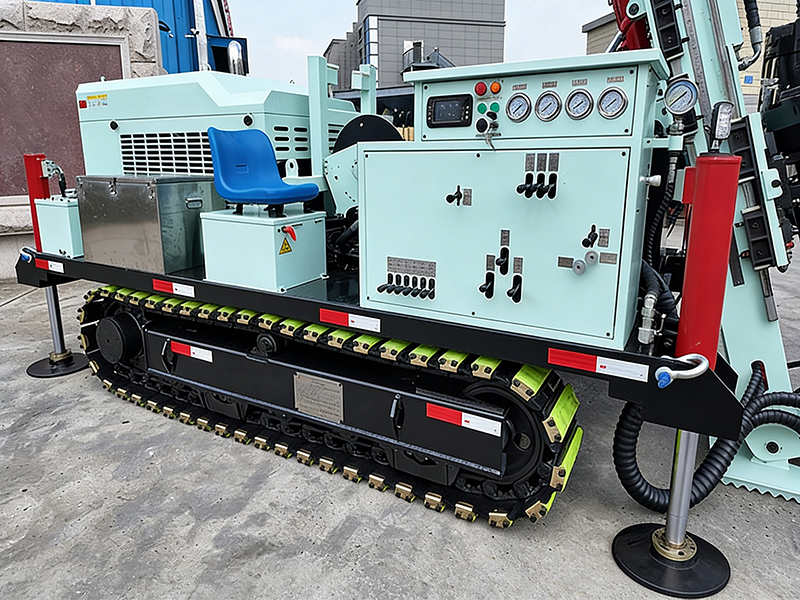
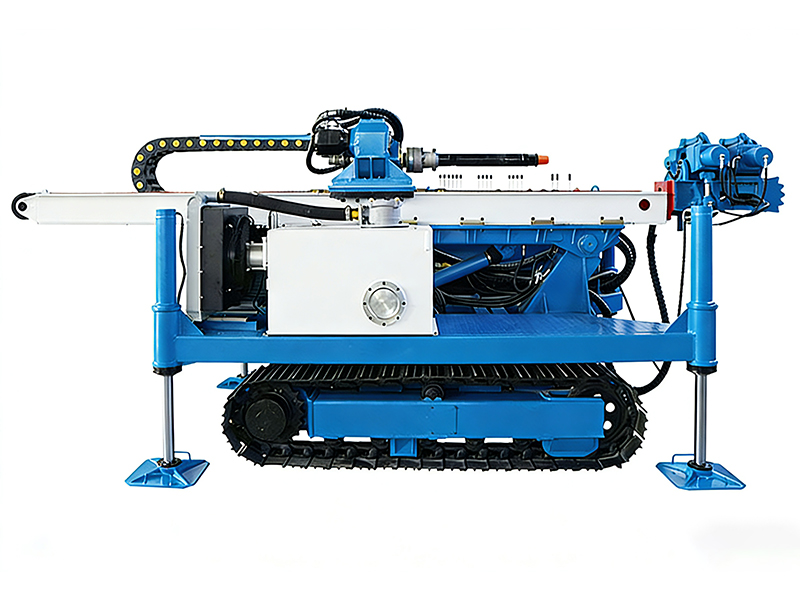
Imagine a machine the height of a 15-story building tasked with guiding a steel needle three miles underground. That is the massive scale of modern drilling equipment. While casual observers often confuse these towers with pumps that extract oil, a rig has a distinct purpose: it exists solely to create the hole. Just as a house requires more than a hammer, these structures rely on complex engineering to function.
Rather than a single machine, experts define what are the components of a drilling rig as five synchronized systems. To cut through rock, separate mechanical teams must simultaneously power the site, hoist loads, rotate pipe, circulate fluids, and control pressure. This coordination turns a steel skeleton into a working system.
The Steel Skeleton: Why the Substructure and Derrick Support Millions of Pounds
If you visit a land rig, you will notice the main work area floats up to 30 feet in the air. This elevated base, known as the substructure, does more than just add height. By lifting the platform, engineers create a vital "basement" area underneath for the massive safety valves that control the well pressure.
Rising from this base is the derrick, the tall steel tower that defines the skyline. Think of this framework as a vertical crane designed for extreme heavy lifting. It must have the load capacity to hold miles of steel pipe that can weigh as much as a jumbo jet. As the crew drills deeper, the derrick bears every pound of that suspended weight.
To facilitate assembling a modular land drilling rig in remote areas, these parts pin together like a giant erector set. The system relies on three primary
drilling rig components:
The Substructure: The elevated base providing clearance.
The Derrick: The tower supporting the pipe's weight.
The Rig Floor: The stage where the crew works.
With the skeleton built, it needs immense energy to come alive.
The Rig's Powerhouse: Why Drilling Requires Enough Energy to Light a City
Imagine unplugging a small factory and moving it to a remote field; that is the scale of powering a drill site. Because rigs operate far from utility poles, they act as portable power plants. Massive diesel engines, called prime movers, burn fuel to spin electrical generators. Rather than driving machinery directly, they produce electricity to run the drilling equipment, generating enough energy to light a small town.
Reliability is critical, so engineers design drilling rig power system requirements with built-in backups. A typical site uses multiple engine-generator sets connected to a central control house, acting like a smart circuit breaker panel. If one engine fails, others pick up the load to prevent a dangerous blackout. This internal grid distributes power to the heavy motors on the drill floor, providing the raw muscle needed to lift and spin the massive pipe string.
The Hoisting and Rotating Muscle: How the Drawworks and Top Drive Move Miles of Pipe
With electricity flowing, the rig directs its raw muscle toward the drawworks, a massive winch functioning like a high-powered fishing reel. By spooling heavy steel cable in and out, the function of the drawworks in hoisting precisely raises and lowers the traveling blocks that support the immense weight of the drill string. This capability allows the crew to insert pipe into the well or pull it out for maintenance, lifting hundreds of thousands of pounds with millimetric control.
Once suspended, the pipe must spin to bore into the earth. While historical rigs turned the pipe from the floor using a rotary table, most modern rigs utilize a Top Drive. This powerful motor hangs directly above the pipe, offering distinct advantages over the older method:
Speed: Top drives rotate the string faster and handle longer sections of pipe than the traditional Kelly system.
Safety: Automated robotic arms often replace manual labor, keeping crew members away from dangerous moving parts.
Control: The difference between top drive and kelly system includes better torque management, preventing the pipe from getting stuck.
All this force travels down to the drill bit, the cutting tool engineered to conquer specific rock layers. For soft ground, engineers select bits with steel teeth that tear into the soil, while hard granite requires types of drill bits for different formations embedded with industrial diamonds to grind away the stone. However, all that friction creates intense heat and debris, requiring a specialized fluid to keep the operation running.
The Circulation System: Why 'Drilling Mud' is the Rig's Vital Bloodstream
Just as a car engine needs oil and a radiator, a drilling rig relies on a complex fluid network to survive the extreme conditions underground. The mud pumps serve as the heart of this system, forcing a special mixture called "drilling mud" down the hollow drill pipe at incredibly high pressure. These massive pumps are the rig's lifeline; if they fail, the entire operation grinds to a halt, making mud pump maintenance and troubleshooting a top priority for the crew to ensure continuous flow.
As the fluid exits the drill bit miles underground, it flows back up the outside of the pipe to perform several life-saving functions. The role of drilling fluid in the circulating system is multifaceted, handling four specific jobs simultaneously:
Cooling: It absorbs the intense heat generated by friction at the cutting tip.
Cleaning: It carries rock cuttings (waste) away from the bottom of the hole like a conveyor belt.
Stability: It creates a wall-cake that plasters the sides of the well to prevent the earth from caving in.
Pressure Control: The heavy weight of the fluid holds back underground gas and oil from surging up unexpectedly.
Once the fluid returns to the surface, it is laden with rock debris that must be removed before the mud can be reused. The mixture passes over the shale shaker, a vibrating sieve that separates the solid rock cuttings from the liquid mud. This recycling process ensures that clean fluid is constantly available to support the various drilling tools downhole. With the hole stabilized and the system circulating, the only remaining challenge is handling sudden pressure surges, a task reserved for the rig's ultimate safety device.
The Blowout Preventer: How the Industry's Massive Emergency Brake Saves Lives
Even with drilling mud functioning as a primary barrier, the rig needs a failsafe for unpredictable pressure surges. The Blowout Preventer (BOP) sits directly on the wellhead like a massive, 50-ton emergency brake. As the most critical piece of well control equipment essential for safety, the BOP is designed to seal off the well instantly to protect the crew and environment, a function that remains constant regardless of the configuration differences between offshore vs onshore drilling rig equipment.
The mechanics of how a blowout preventer works reveal a mechanism powerful enough to crush or shear through solid steel pipe to stop a flow. In a crisis, the system follows a precise sequence:
Detection: Sensors alert the driller to an unexpected influx of pressure.
Activation: Hydraulic rams trigger to clamp around the drill pipe.
Sealing: The well is physically isolated, trapping the dangerous pressure underground.
From Components to Completion: How These Systems Sync Up for Success
You no longer see just a steel tower; you see a synchronized machine where power, fluids, and hoisting gear work in harmony. By managing drill string vibrations and stress, these massive components guide the bit miles underground with incredible precision.
As technology advances, the industry is shifting toward robotics. Today’s automated pipe handling system benefits operations by boosting safety and efficiency, keeping crews out of harm's way. These engineering marvels power daily life, transforming a complex industrial sight into a recognizable feat of human ingenuity.