Full Hydraulic Drilling Rig: An Efficient And Flexible Modern Drilling Solution – Functions And Usage Guide
Release time:2026-03-20
Visits:246
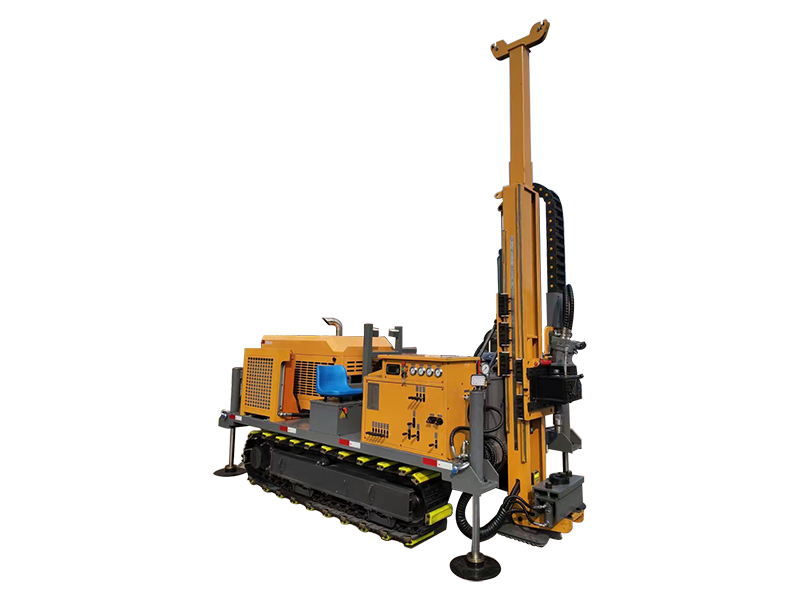
As a core equipment in the field of modern engineering construction and resource exploration, the full hydraulic drilling rig is playing an increasingly important role with its excellent performance and wide applicability. It drives and controls all key operating components through a hydraulic system, achieving a perfect combination of efficient operation and precise control, thus being highly favored in multiple industries such as mining, construction, and geological exploration. This article will delve into the main functions, usage methods, and importance of full hydraulic drilling rigs in modern engineering.
Core Functions of Full Hydraulic Drilling Rigs
The wide application of full
hydraulic drilling rigs stems from their powerful and diverse functional design, which can meet various drilling needs under complex working conditions:
1. Efficient Drilling Operation: This is the most basic and important function of a full hydraulic drilling rig. It drives the drill bit to rotate through a hydraulic motor and provides strong propulsive force using hydraulic cylinders, thereby efficiently drilling holes in underground rock formations or soil. Whether it is for the extraction of mineral resources, geological structure exploration, or foundation construction of large-scale projects, full hydraulic drilling rigs are capable.
2. Precision Directional Drilling: Under many complex geological conditions or specific engineering requirements, straight-line drilling often cannot meet the needs. Full hydraulic drilling rigs possess excellent directional drilling capabilities. Operators can precisely adjust the direction and trajectory of the borehole through the hydraulic control system, ensuring that the borehole extends according to the design requirements. This is crucial for bypassing obstacles, performing horizontal drilling, or achieving exploration at specific angles.
3. Auxiliary Percussion Function: To cope with hard or complex formations, some advanced full hydraulic drilling rigs are also equipped with a percussion function. This function can apply periodic impact force through the hydraulic system, helping the drill bit break hard rock or effectively free stuck drilling tools, thereby significantly improving drilling efficiency and reducing construction delays.
Standard Usage Methods of Full Hydraulic Drilling Rigs
Proper use of a full hydraulic drilling rig is key to ensuring operational safety, improving construction efficiency, and extending equipment life. The following are the commonly followed usage steps:
1. Comprehensive Preparation Work: Before starting the drilling rig, meticulous preparation is indispensable. First, carefully inspect the overall condition of the equipment, including the hydraulic oil level, whether the oil pipe connections are firm and leak-free, and whether the drilling tools are in good condition. Then, start the equipment for a brief idle run, observe whether all components (such as hydraulic pumps, motors, propulsion systems) are operating normally, and check for any abnormal noise or vibration. Only start the operation when everything is ready.
2. Accurate Positioning and Hole Opening: Move the drilling rig smoothly and accurately position it at the preset drilling location. According to the drilling design requirements, carefully adjust the angle and height of the drilling tool. Once everything is ready, start the drilling system and begin the hole opening operation slowly and steadily to ensure that the verticality or predetermined angle of the initial borehole meets the requirements.
3. Optimized Drilling Operation: During the normal drilling phase, operators need to reasonably control parameters such as drilling speed, feed pressure, and rotational torque based on real-time geological conditions and drilling feedback. The advantage of the full hydraulic system lies in its precise and flexible control, which can quickly respond and adjust to achieve the best drilling efficiency and borehole quality.
4. Continuous Monitoring and Dynamic Adjustment: During the drilling process, it is necessary to closely monitor various operating parameters of the equipment, such as hydraulic system pressure, oil temperature, and motor temperature. At the same time, pay attention to the borehole cuttings return to judge formation changes. If any abnormality is found, stop the machine immediately for inspection and timely adjust the operating parameters or take corresponding measures according to the actual situation.
5. Safe Stopping and Pulling Out of the Hole: When the borehole reaches the predetermined depth or when the drilling tool needs to be replaced, gradually reduce the feed pressure and smoothly stop the drilling and rotation actions. Then, perform the hole pulling operation in accordance with the operating procedures to safely and orderly pull the drilling tool out of the hole.
Conclusion
With its efficient, flexible, and intelligent characteristics, the full hydraulic drilling rig is becoming an indispensable key equipment in many fields such as mining, construction, and geological exploration. Mastering its core functions and correct usage methods is of great significance for giving full play to its performance, ensuring operational safety, and improving project efficiency. With the continuous advancement of technology, full hydraulic drilling rigs will develop towards a more intelligent, environmentally friendly, and reliable direction, providing stronger support for future engineering construction and resource development. Choosing a suitable full hydraulic drilling rig and ensuring that operators receive professional training are prerequisites for achieving efficient and safe construction."