Geological survey drilling is the primary tool for subsurface investigation in mineral exploration. While surface geological mapping, geophysics, and geochemistry provide indirect evidence of mineralization, drilling is the only method that directly samples the subsurface, revealing lithology, mineralization style, grade distribution, and structural controls.
The choice of drilling method fundamentally shapes what your exploration program can achieve. A method suited to one exploration objective may deliver completely wrong samples for another. RC drilling may be ideal for rapidly delineating a gold resource but entirely unsuitable for coal exploration where stratigraphic continuity must be preserved.
This article provides a comprehensive technical reference for the four primary geological survey drilling methods used in mineral exploration: reverse circulation (RC) drilling, diamond core drilling, auger drilling, and air rotary drilling. Each method is evaluated against formation suitability, sample quality, depth capability, cost benchmarks, and optimal use cases.
Reverse Circulation (RC) Drilling
Technical Overview
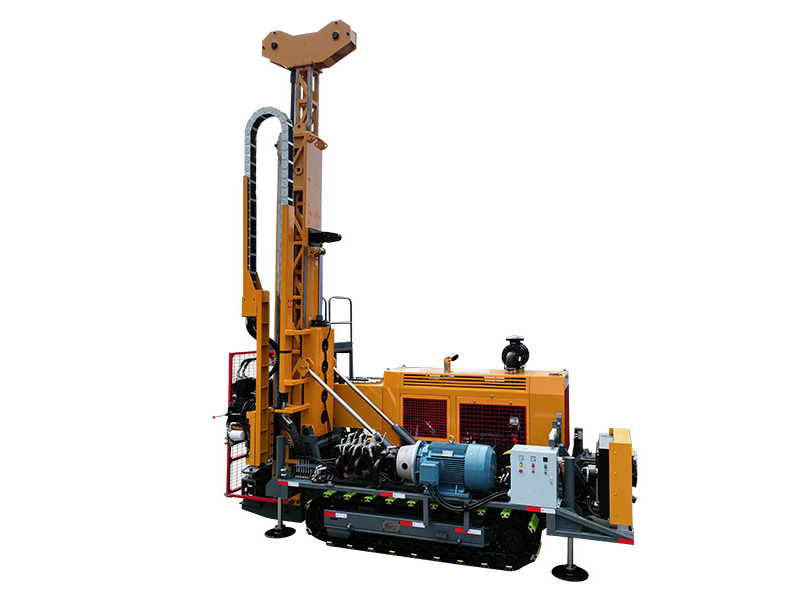
RC drilling uses a dual-wall drill string with compressed air injected down the annulus, lifting rock cuttings through the inner tube to the surface. Samples are collected continuously at 1-meter intervals (or as specified) via a cyclone and rotary splitter.
Typical specifications:
Hole diameter: 41/2" to 51/2" (114-140 mm)
Sample interval: 1m standard (0.5m available)
Compressor requirement: 900-1,800 psi, 500-1,500 cfm
Penetration rate: 30-150 m/shift (formation-dependent)
Maximum depth: 300-800m (specialized rigs to 1,000m+)
Cost range: $25-$80/m
Formation Suitability
Optimal formations for RC drilling:
Regolith and weathered profiles (laterite, saprolite, transported cover)
Soft to medium-hard igneous and metamorphic rock
Consolidated sediments (sandstone, conglomerate where competent enough for RC)
Low to moderate clay content (high clay causes "balling" and reduced penetration)
Challenging or unsuitable formations:
Highly fractured or broken ground (sample loss through fractures)
Cavity-prone carbonate terrain (sample loss in voids)
Very high clay content formations (bit balling, blocked sample return)
Unconsolidated wet sands (sample dilution with drilling fluid)
Optimal Applications
RC drilling excels in:
Grade control drilling in operating mines (rapid 24-48 hour assay turnaround)
Reconnaissance exploration across wide areas requiring high meterage
Porphyry copper and gold systems where bulk geochemical sampling defines mineralized zones
Iron ore and bauxite exploration where bed continuity is not as critical as grade
Laterite nickel and residual mineral deposits where weathered profiles are the target
Diamond Core Drilling
Technical Overview
Diamond core drilling uses a rotating core barrel with an impregnated or surface-set diamond drill bit to cut an intact cylindrical core sample. The core is retrieved via wireline or conventional core barrel retrieval at the end of each drilling run.
Typical specifications:
Core sizes: AQ (27mm), BQ (36mm), NQ (48mm), HQ (63mm), PQ (85mm)
Core recovery: Target >95% in competent rock
Penetration rate: 3-20 m/shift (highly formation-dependent)
Maximum depth: 1,500-4,500m (scientific drilling to 6,000m+)
Cost range: $50-$250/m
Formation Suitability
Optimal formations for diamond core drilling:
All competent to moderately fractured igneous and metamorphic rocks
Structured and metamorphic terrain where stratigraphy must be preserved
Environments where core orientation is required for structural analysis
Deep exploration where RC cannot reach economically
Any application requiring mineralogical and textural analysis
Challenging or unsuitable formations:
Unconsolidated formations (core cannot be retrieved as intact core)
Highlybroken or crushed zones (core recovery drops to <50%)
Soft, plastic formations (clay swelling, core distortion)
Cavity-prone geology (core loss in voids)
Optimal Applications
Diamond core drilling is the preferred method for:
Greenfield exploration where geological models are being established
Resource definition drilling for indicated and measured resource categories
Structural geology investigations (faults, folds, vein systems)
Rock mechanics and geotechnical parameters (RQD, UCS, elastic modulus)
Coal and iron ore exploration requiring accurate stratigraphic correlation
Deep exploration drilling beyond 500-600m depth
Auger Drilling
Technical Overview
Auger drilling uses a rotating helical screw auger to drill into the ground and transport cuttings to the surface. The auger flights carry cuttings upward as the auger rotates, with the drill string extending as drilling progresses.
Typical specifications:
Hole diameter: 75-300mm (typically 100-150mm for exploration)
Maximum depth: 30-100m (flights typically 3-6m, joined by pipe)
Penetration rate: 5-30 m/hour (very fast in soft ground)
Sample type: Bulk cuttings from auger flights
Cost range: $10-$35/m
Formation Suitability
Optimal formations for auger drilling:
Completely weathered material and regolith
Unconsolidated to semi-consolidated sediments
Clay, silt, sand, and gravel (above water table or in dry conditions)
Glacial tills and residual soils
Soft overburden where rapid coverage is needed
Challenging or unsuitable formations:
Hard rock (auger cannot penetrate competent igneous or metamorphic rock)
Water-saturated cohesionless sands (cavings collapse into hole)
Boulder fields and cobble-rich material (blockage)
Any formation requiring >100m depth
Optimal Applications
Auger drilling is used for:
Shallow geochemical sampling in regolith-dominated terrain
Environmental and soil geochemistry surveys
Coal exploration in shallow, flat-lying deposits
Geotechnical site investigation for infrastructure planning
Reconnaissance coverage of large areas at low cost before follow-up with RC or core
Air Rotary Drilling
Technical Overview
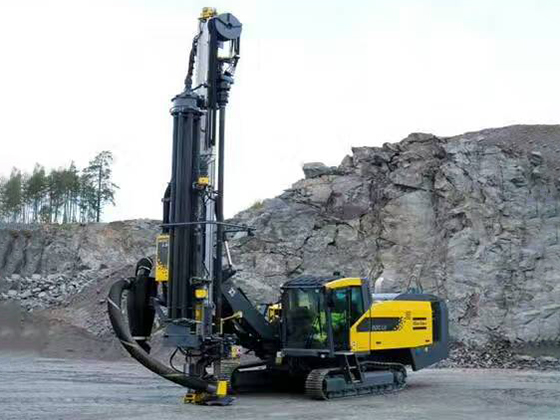
Air rotary drilling uses a tricone or drag bit rotated at high RPM with air as the flushing medium. Cuttings are lifted by air velocity through the annulus and captured at the surface. This method is similar to RC but uses a single-wall pipe and is optimized for faster penetration in competent rock.
Typical specifications:
Hole diameter: 90-200mm
Penetration rate: 20-80 m/shift (faster than RC in hard rock)
Sample type: Cuttings only (not suitable for core)
Air requirement: 600-1,200 psi, 300-1,000 cfm
Maximum depth: 300-600m
Cost range: $30-$70/m
Formation Suitability
Optimal formations for air rotary drilling:
Competent igneous and metamorphic rock (granite, basalt, gneiss)
Consolidated sedimentary rock (sandstone, limestone)
Mixed formations with hard and soft intervals
Conditions requiring rapid penetration in hard rock where core is not essential
Challenging or unsuitable formations:
Soft, clay-rich formations (bit balling)
Highly fractured rock (air loss, poor cuttings transport)
Unconsolidated formations (hole stability issues)
Optimal Applications
Air rotary drilling is used for:
Blasthole drilling in mining operations (production drilling)
Water well drilling in hard rock
Geotechnical investigation where rock core is not required
Rapid reconnaissance drilling where geochemical chips are sufficient
Method Comparison Matrix
Primary method: Auger drilling for shallow regolith coverage + RC drilling for initial deeper testing
Primary method: RC drilling for geochemical definition + limited diamond core for geological understanding
Primary method: Diamond core drilling for resource classification + infill RC for grade control