Rock Bolt Drilling Rig: A Key Equipment In Engineering Construction - Comprehensive Guide To Types, Selection, And Usage
Release time:2026-08-10
Visits:238
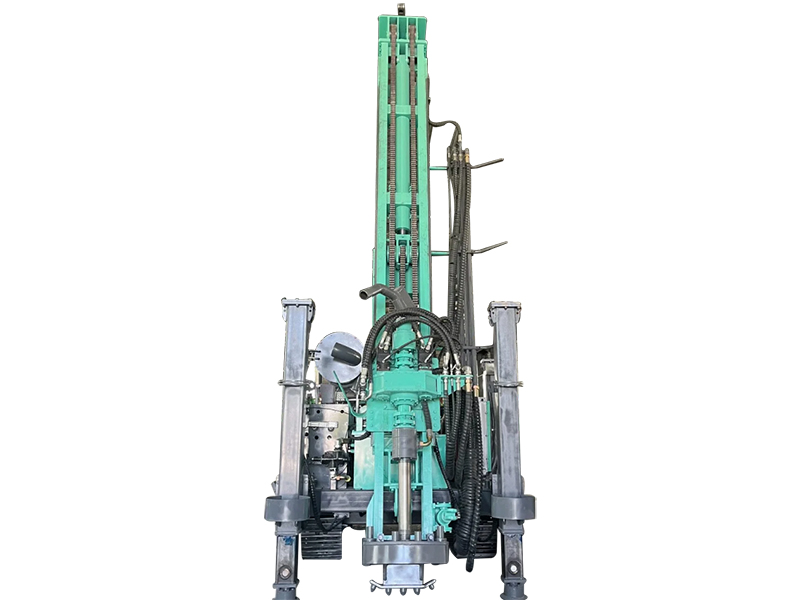
In engineering fields such as mining, tunnel construction, and geological exploration, rock bolt support is an important technical means to ensure construction safety and structural stability, and the rock bolt drilling rig is the core equipment to realize this technology. As a tool specifically used for drilling holes in rock and soil and installing rock bolts, the performance of the rock bolt drilling rig directly affects project efficiency and quality. This article will detail the main types, selection points, and usage and maintenance knowledge of rock bolt drilling rigs to help engineering practitioners better understand and apply this equipment.
According to different power sources and applicable scenarios, rock bolt drilling rigs can be divided into various types, each with its unique advantages, which need to be selected according to engineering requirements:
1. Pneumatic Rock Bolt Drilling Rig: A Flexible and Convenient Choice for Small and Medium-Sized Projects
Pneumatic rock bolt drilling rigs use compressed air as the power source, featuring simple structure, small size, and convenient maintenance. Since they do not require a complex power system, they have high operational flexibility, especially suitable for small and medium-sized projects with narrow spaces and complex working environments, such as small mine roadways and shallow tunnel support. In addition, pneumatic equipment has strong environmental adaptability and can operate stably in dusty environments, making it a cost-effective basic choice.
2. Hydraulic Rock Bolt Drilling Rig: An Efficient Tool for High-Power Projects
Hydraulic rock bolt drilling rigs rely on a hydraulic system to provide power, with the greatest advantage of high output power and high drilling efficiency. They have strong power and can handle rock and soil environments with high hardness, such as deep tunnels, large-scale mining, and other large projects. At the same time, the stability of the hydraulic system enables it to perform reliably in long-term continuous operations, with strong adaptability, making it the first choice for projects with high requirements for construction efficiency and depth.
3. Electric Rock Bolt Drilling Rig: An Environmentally Friendly, Low-Noise Equipment
Electric rock bolt drilling rigs are powered by electricity, featuring low noise and zero emissions, making them very suitable for engineering scenarios with strict environmental requirements, such as tunnel construction near cities and geological exploration near residential areas. They are easy to operate and do not require additional power sources (such as air compressors or hydraulic stations), and can be directly connected to the power grid. They have obvious advantages especially in projects focusing on green construction and improvement of the working environment.
II. Key Points for Selecting Rock Bolt Drilling Rigs
Selecting a suitable rock bolt drilling rig requires considering the actual engineering needs, comprehensively evaluating equipment performance, manufacturer strength, and usage costs. The following are core selection suggestions:
1. Clarify Engineering Requirements: Determine the Type Based on the Scenario
Before purchasing, it is necessary to clarify the project scale (small/large), geological conditions (rock and soil hardness, drilling depth), and environmental requirements (noise, pollution restrictions). For example, urban tunnel projects should prefer electric drilling rigs to meet environmental protection requirements; large-scale mining requires hydraulic drilling rigs to ensure efficiency; small and medium-sized roadway support can use pneumatic drilling rigs to control costs.
2. Choose Reliable Manufacturers: Quality and After-Sales Service are Core
Equipment quality directly affects construction safety and efficiency. It is recommended to choose manufacturers with good industry reputation and profound technical accumulation. Such manufacturers usually have mature production processes and a complete after-sales service system, and can provide timely equipment maintenance, parts supply, and technical support, reducing.
3. Focus on Cost-Effectiveness: Balance Performance and Cost
On the premise of meeting engineering needs, it is necessary to compare the cost-effectiveness of products from different manufacturers. Avoid blindly pursuing ""high price and high configuration"", and also be wary of low-cost and low-quality equipment (which may have safety hazards or short service life). You can choose products with stable performance and reasonable cost by inspecting the quality of core components and user reputation.
4. Consider Later Maintenance: Reduce Long-Term Usage Costs
The maintenance convenience of the equipment directly affects the usage cost. When purchasing, attention should be paid to whether the equipment structure is easy to disassemble, whether the parts are universal, and whether daily maintenance is simple (such as lubrication, cleaning, etc.). For example, pneumatic drilling rigs have a simple structure, and their maintenance costs are usually lower than those of hydraulic drilling rigs, making them suitable for scenarios with limited budgets or maintenance resources.
III. Safety Usage and Maintenance Guide for Rock Bolt Drilling Rigs
Proper use and maintenance of rock bolt drilling rigs can not only extend the equipment life but also ensure construction safety. The following are key precautions:
1. Strictly Abide by Safety Operation Procedures
Before use, you must carefully read the equipment operation manual and be familiar with the safety warnings and operation steps of the equipment. During operation, protective equipment (such as safety helmets, goggles, dust masks) must be worn. It is forbidden to perform maintenance or adjustments when the equipment is running, and ensure that no irrelevant personnel approach the construction area.
2. Regular Maintenance: Prevent Failures
Regularly inspect and maintain the equipment, focusing on the power system (such as pneumatic pipelines, hydraulic oil, motors), drill pipes, drill bits, and other easily worn components. For example, pneumatic drilling rigs need to regularly clean the air filter to prevent blockage; hydraulic drilling rigs need to check the hydraulic oil level and cleanliness to avoid impurities affecting system operation; electric drilling rigs need to check the cable insulation to prevent leakage risks.
3. Comprehensive Inspection Before Operation: Ensure the Equipment is in Good Condition
Before each use, check whether all components of the equipment are intact: whether the drill pipe is bent or worn, whether the connection parts are tight, and whether the power system starts normally. If abnormalities are found (such as abnormal noise, oil leakage, electric leakage), stop the machine immediately for maintenance. It is forbidden to ""operate with faults"" to avoid safety accidents.
Summary
As a key equipment in engineering construction, the type selection, purchasing strategy, and usage and maintenance of rock bolt drilling rigs are directly related to construction efficiency, safety, and cost. Whether it is the flexible needs of small and medium-sized projects or the high-efficiency requirements of large-scale projects, it is necessary to scientifically select equipment according to the actual scenario, and give full play to its performance advantages through standardized operation and regular maintenance. It is hoped that this article can provide practical reference for engineering practitioners and help projects proceed smoothly."