Hydraulic Rock Drill: Working Principle, Application Scenarios, And Purchasing Guide
Release time:2026-02-02
Visits:362
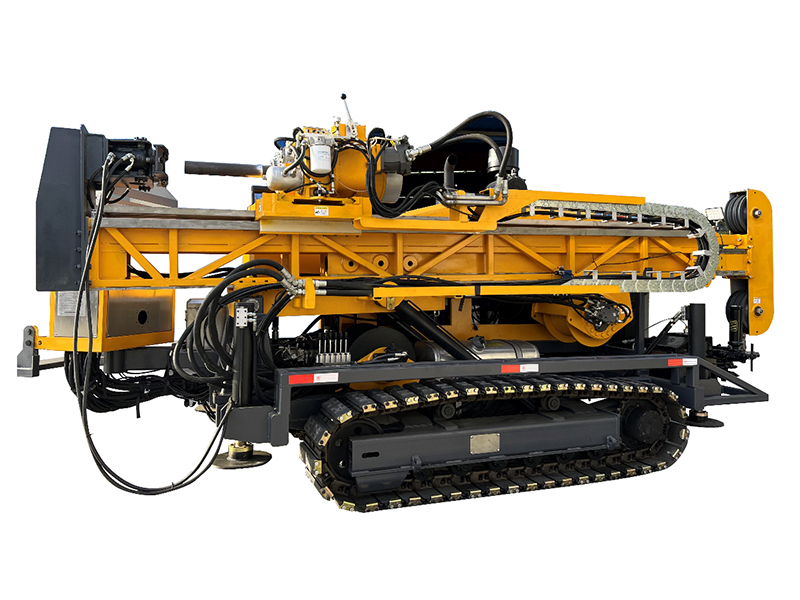
In the fields of mining, tunnel excavation, construction, etc., rock drilling is a fundamental and crucial. As an efficient impact crushing equipment, the hydraulic rock drill, with its powerful power and stable performance, has become an indispensable tool in modern engineering. This article will detailedly introduce the working principle, main application scenarios, and purchasing points of hydraulic rock drills to help you better understand this equipment.
I. Working Principle of Hydraulic Rock Drill: Impact Crushing Mechanism Driven by Hydraulic Energy
The core working principle of a
hydraulic rock drill is based on ""impact crushing"", and its power source is the hydraulic system. Simply put, the equipment converts mechanical energy into hydraulic energy through a hydraulic pump, and then converts the hydraulic energy into high-frequency and high-intensity impact force through components such as hydraulic cylinders. When the hydraulic oil flows rapidly in the system, it will push the piston inside the rock drill to reciprocate at a high speed, and the piston hits the drill bit, causing the drill bit to produce continuous and intensive impact on the rock. This impact energy overcomes the compressive strength of the rock, gradually breaking the rock and forming a borehole.
Compared with traditional pneumatic rock drilling equipment, the hydraulic system can provide more stable power output and higher energy conversion efficiency. Therefore, the hydraulic rock drill has faster drilling speed, lower energy consumption, and relatively less vibration and noise during operation.
II. Application Scenarios of Hydraulic Rock Drill: Wide Adaptation from Mines to Construction
With its high efficiency and flexibility, hydraulic rock drills are widely used in multiple fields and have become an ideal choice to replace traditional pneumatic picks and other equipment:
1. Mining Field
In the mining of metal ores, non-metallic ores and other mines, hydraulic rock drills are often used for roadway excavation, ore vein drilling and other operations. Its powerful impact force can adapt to rocks of different hardness. When combined with equipment such as loaders and mining vehicles, it can significantly improve mining efficiency and reduce labor intensity.
2. Tunnel and Underground Engineering
Whether it is traffic tunnels, water conservancy tunnels or underground pipeline construction, the hydraulic rock drill is one of the key equipment. It can work flexibly in narrow underground spaces to complete tasks such as rock bolt support and blast hole drilling, ensuring the safety and progress of tunnel construction.
3. Construction and Municipal Engineering
In building foundation treatment, demolition projects or municipal road construction, hydraulic rock drills can be used for rock foundation drilling, concrete structure crushing and other scenarios. Some small hydraulic rock drills can also be used with hydraulic engineering vehicles, small backhoe loaders, etc., to improve the flexibility and adaptability of operations.
III. Purchasing Guide for Hydraulic Rock Drill: Three Core Elements for Scientific Selection
When purchasing a hydraulic rock drill, it is necessary to comprehensively consider equipment performance, usage needs and long-term maintenance costs. The following three elements are particularly critical:
1. Adaptability: Ensure the Equipment Matches the Operation Requirements
Different models of hydraulic rock drills vary in drilling diameter, impact frequency, applicable rock hardness, etc. When purchasing, it is necessary to clarify the operation scenario (such as mine, tunnel or construction), rock type (soft rock, hard rock) and drilling depth, and select equipment that is suitable for the actual working conditions to avoid affecting operation efficiency due to ""overcapacity"" or ""insufficient performance"".
2. Quality: Pay Attention to the Durability of Core Components
The service life of a hydraulic rock drill is directly related to the quality of its core components. It is recommended to give priority to drill bits, pistons and other wearing parts made of high-strength alloy materials. These parts need to have wear-resistant and impact-resistant properties to reduce downtime and costs caused by frequent replacement. At the same time, the sealing performance of the equipment's hydraulic system also needs to be focused on. High-quality seals can reduce the risk of oil leakage and ensure the stable operation of the system.
3. After-sales Service: Perfect Support Reduces Usage Risks
Hydraulic rock drills are precision equipment, and daily maintenance and fault handling require professional support. When purchasing, you should choose a brand or supplier that can provide timely after-sales response, and confirm whether it provides parts supply, maintenance services and technical guidance. Perfect after-sales service can help users quickly solve equipment problems and reduce construction period delays caused by faults.
Conclusion
As an efficient drilling equipment in modern engineering, the working principle, application scenarios and purchasing points of hydraulic rock drills directly affect operation efficiency and cost. By understanding its hydraulic-driven impact crushing mechanism, application characteristics adapted to different fields, and scientific purchasing from the three aspects of adaptability, quality and after-sales service, you can better exert the performance of the hydraulic rock drill and provide reliable support for mines, tunnels, construction and other projects."