In Slope Reinforcement Projects, How Does The Anchor Drilling Rig Adapt To Operating Environments With Different Slopes?
Release time:2025-12-05
Visits:368
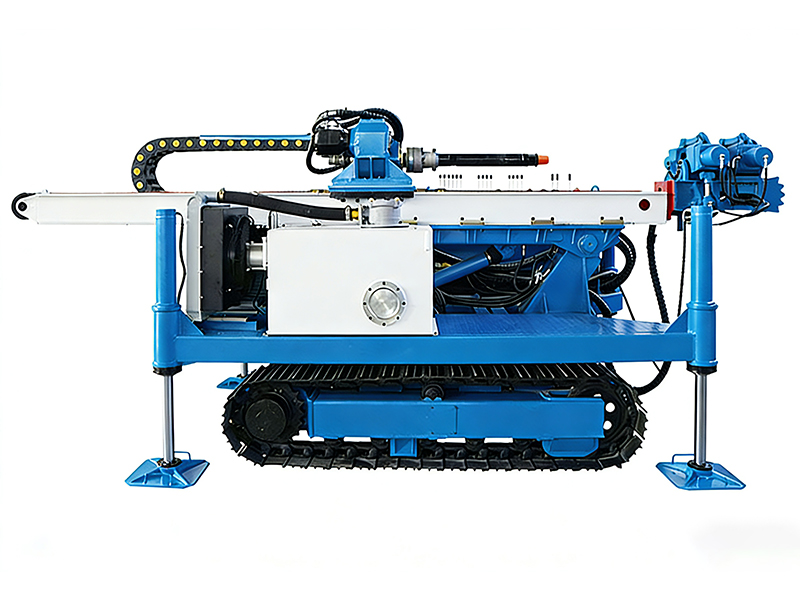
In slope reinforcement operations, work sites with different slopes pose various challenges to the use of the anchor drilling rig. When dealing with a gentle slope environment, the anchor drilling rig can maintain levelness directly by adjusting the height of its supporting legs. At this point, the rig is relatively flexible to move—workers only need to push the equipment slowly to complete drilling at the designed positions, which is suitable for large-area slope reinforcement operations.
When the work site is a steep slope, the anti-slip device of the anchor drilling rig comes into play. The anti-slip tracks at the bottom of the rig can enhance friction with the ground, preventing the equipment from sliding down during operation. Meanwhile, temporary fixing piles need to be installed on both sides of the rig to further limit the displacement of the machine body. In this case, the determination of drilling positions requires more caution—usually, workers first mark points on the slope, then align the rig with the marks through its fine-tuning function.
If encountering a nearly vertical slope, it is difficult to meet operational needs by simply adjusting the rig itself. At this time, auxiliary hoisting equipment will be used together. The hoisting equipment slowly lowers the anchor drilling rig to the specified height, and the rig operator must cooperate closely with the hoisting personnel to control the drilling angle and force. This avoids the rig shifting due to gravity, ensuring that the position and depth of the anchor holes meet the reinforcement requirements.