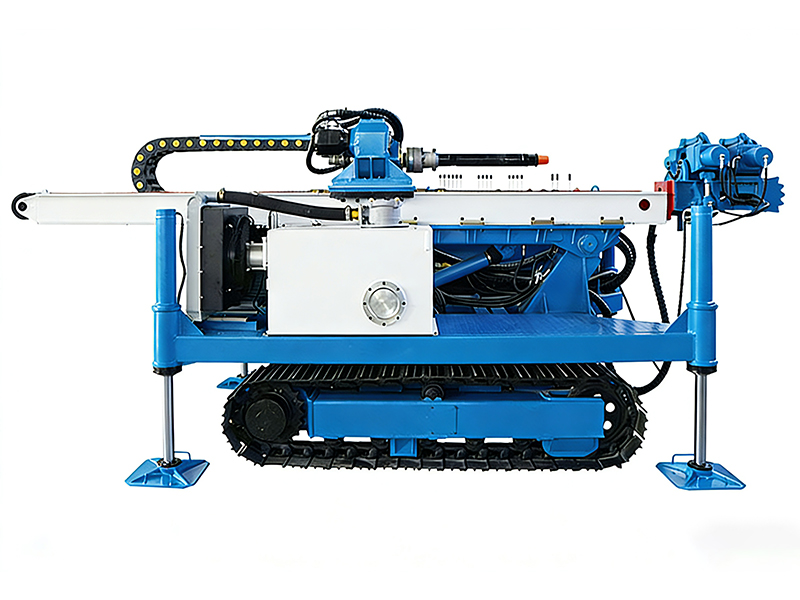
Grouting Pumps: A Comprehensive Analysis Of Functions, Principles, And Applications Of Core Power Equipment In Engineering Construction
Release time:2026-07-27
Visits:253
In the field of modern engineering construction, whether it is underground mine excavation, tunnel, water conservancy project seepage prevention, or subway construction reinforcement, a key piece of equipment is indispensable - the grouting pump. As the core power equipment for conveying grout, grouting pumps undertake important tasks such as rock stratum reinforcement, water blocking and seepage prevention, and gap filling, directly related to the safety and stability of the project. This article will detail the functions, working principles, main application fields, and advantages of grouting pumps to help you fully understand this engineering ""tool"".
I. Core Function of Grouting Pumps: The ""Guardian"" of Engineering Safety
The core function of a
grouting pump is to provide key support for engineering structures such as reinforcement, seepage prevention, and filling through efficient grout delivery. During engineering construction, grout (such as cement slurry, chemical slurry, etc.) is accurately delivered by the grouting pump into rock fractures, underground cavities, or structural gaps. After the grout solidifies, it can effectively enhance rock stability, block water seepage channels, and fill construction gaps, thereby ensuring construction safety and improving project quality. Whether dealing with complex geological conditions or solving structural hidden dangers during construction, grouting pumps play an irreplaceable ""guardian"" role.
II. Working Principle of Grouting Pumps: Efficient Conveying Driven by High Pressure
The working principle of a grouting pump is based on power drive and pressure conversion. It usually uses compressed air or hydraulic pressure as the power source to drive the cylinder (or oil cylinder) and grouting piston inside the equipment. Utilizing the area difference between the cylinder (or oil cylinder) and the grouting piston, the grouting pump can generate strong pressure to suck the grout from the feed port and then stably and efficiently deliver it to the target position through high pressure.
In terms of structure, grouting pumps mostly adopt single-cavity or double-cylinder reciprocating pump designs, which can achieve continuous grout delivery; they also support the mixing of single-component or two-component grouts to meet the grout performance requirements of different projects. Through the cooperation of components such as cranks and plungers, grouting pumps can also flexibly adjust pressure and flow, ensuring the accuracy and adaptability of grout delivery.
III. Main Application Fields of Grouting Pumps: Covering Multiple Engineering Scenarios
Grouting pumps have a wide range of applications, covering almost all engineering fields that require grout delivery and structural treatment, mainly including:
1. Mine Engineering
In mine excavation, grouting pumps are used to inject grout into the rock formations around the roadway to reinforce loose rock formations, block water seepage channels, reduce the risk of collapse and water inrush, and ensure underground operation safety.
2. Tunnel and Underground Engineering
In tunnel construction (such as highway tunnels, railway tunnels), grouting pumps can pre-reinforce the tunnel face and surrounding rock, fill rock fractures, and prevent problems such as water gushing and collapse during construction; in subway construction, they are also commonly used for seepage prevention and reinforcement of station structures and interval tunnels.
3. Water Conservancy and Hydropower Engineering
In the construction of water conservancy facilities such as reservoir dams, dikes, and water diversion tunnels, grouting pumps are used for tasks such as dam foundation seepage prevention, dam reinforcement, and channel plugging to improve the impermeability and stability of water conservancy projects.
4. Other Engineering Scenarios
In addition, grouting pumps are also widely used in scenarios such as building foundation reinforcement, foundation pit support, and geological disaster control (such as landslide prevention), becoming an indispensable key equipment in various engineering constructions.
IV. Advantages and Characteristics of Grouting Pumps: An ""All-around Player"" Adapting to Complex Environments
The reason why grouting pumps can play an important role in various projects is inseparable from their unique advantages and characteristics:
1. Efficiency and Precision
Through flexible adjustment of pressure and flow, grouting pumps can adapt to different grout characteristics and construction requirements, achieving efficient and precise grout delivery and improving construction efficiency.
2. Safety and Reliability
Some grouting pumps have explosion-proof safety designs, which can adapt to complex construction environments such as mines and underground that are flammable and explosive, ensuring operation safety; at the same time, the equipment runs stably with low failure rate, reducing the risk of construction interruption.
3. Compact Structure and Easy Maintenance
The overall structure of the grouting pump is compact, occupies small space, and is convenient to move and install in narrow engineering sites; the daily maintenance process is simple, no complicated operations are required, which can reduce equipment maintenance costs.
4. Functional Integration
Some models of grouting pumps also integrate auxiliary functions such as screw grout feeding and vibration filtration, which can simplify the grout preparation and delivery process and further improve construction convenience.
Conclusion: Grouting Pumps - The ""Power Core"" of Engineering Construction
As the core power equipment in engineering construction, grouting pumps provide reliable support for key tasks such as rock stratum reinforcement, water blocking and seepage prevention, and gap filling through efficient grout delivery. Whether in mines, tunnels, water conservancy, or subway projects, grouting pumps, with their efficient, safe, and reliable characteristics, have become the ""essential tool"" to ensure project quality and construction safety. With the continuous development of engineering technology, the performance of grouting pumps will be further optimized to provide more powerful power support for more complex engineering scenarios."