Oil Drilling Tools: Understanding Key Types And Their Importance In Drilling Operations
Release time:2026-03-30
Visits:262
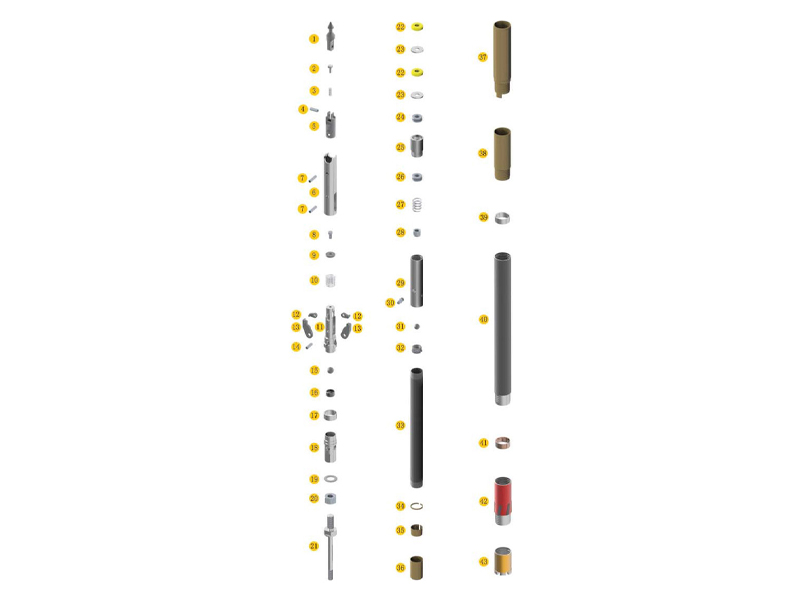
Oil drilling is a complex and precise engineering endeavor, with drilling tools serving as its indispensable core components. These are the key tools directly used to break underground rocks and form wellbores, and their performance and selection are directly related to the efficiency, cost, and even safety of drilling operations. Understanding the different types of oil drilling tools and their functions is crucial for comprehending the drilling process and ensuring operational success.
Main Types of Oil Drilling Tools
There is a wide variety of
oil drilling tools, each with its specific design and application scenarios. Based on their functions and positions in the drilling process, they can be divided into the following main categories:
1. Drill Bit
The drill bit is located at the forefront of the drilling assembly and is the tool that directly breaks rock. According to the hardness and characteristics of the formations encountered, drill bits are mainly of the following types:
Drag Bits: These bits are typically suitable for softer formations, such as loose sedimentary rocks. Their design allows them to effectively scrape and break such rocks.
Roller Cone Bits: Roller cone bits break rock through a combination of rotation and impact, making them suitable for a variety of formation conditions from medium-hard to hard.
Diamond Bits: When dealing with extremely hard rocks, such as granite or basalt, diamond bits are the ideal choice. They generally offer higher wear resistance and drilling speed, capable of handling extremely hard geological environments.
2. Drill Collar
The drill collar is an important component connecting the drill bit and the upper drilling tools. Its main function is to transmit the torque and weight on bit (WOB) required during drilling. To withstand the enormous tensile, compressive, and bending stresses encountered in drilling operations, drill collars are typically made of high-strength steel and have large wall thickness and weight to provide sufficient WOB and maintain wellbore verticality.
3. Kelly
The kelly is located at the uppermost end of the drill string. Its upper end is connected to the rotary table, and the lower end is connected to the drill collars or other drilling tools. Its primary role is to transmit the torque and power generated by the rotary table to the entire drill string and the drill bit. The cross-section of the kelly is usually square or hexagonal, facilitating stable rotation within the rotary table and torque transmission.
4. Bottom Hole Assembly (BHA)
The Bottom Hole Assembly, commonly referred to as BHA, is not a single tool but an integrated assembly composed of various tools with different functions, configured according to specific drilling requirements. A typical BHA usually includes the drill bit, drill collars, kelly, and other necessary auxiliary tools. The design and selection of the BHA need to be optimized based on the specific drilling objectives, formation conditions, and wellbore design.
5. Other Auxiliary Drilling Tools
In addition to the main drilling tools mentioned above, several auxiliary tools play important roles in drilling operations:
Measurement While Drilling / Logging While Drilling (MWD/LWD Tools): These tools can real-time monitor and transmit downhole key parameters during drilling, such as wellbore trajectory and formation characteristics, helping drilling engineers stay informed about downhole conditions and adjust drilling parameters accordingly.
Coring Tools: When it is necessary to obtain subsurface rock samples for analysis to understand formation lithology, reservoir characteristics, etc., coring tools become particularly important. They can bring the core to the surface intact while drilling.
Jetting Tools: These tools typically utilize the jetting action of high-pressure drilling fluid to assist in breaking rock, and can effectively increase drilling speed under certain specific formation conditions.
The Importance of Drill Tool Selection
Selecting the appropriate drill tool assembly and using it correctly is key to ensuring safe and efficient drilling operations. Drilling engineers need to consider a variety of factors, including but not limited to:
Formation Conditions: The rock type, hardness, abrasiveness, porosity, and permeability of the formation are the primary basis for selecting drill bits and other tools.
Drilling Depth: Different drilling depths correspond to different downhole pressure, temperature, and torque requirements, posing varying challenges to the strength and durability of drilling tools.
Drilling Objectives: Whether it is an exploration well, a production well, or another type of well, the different drilling objectives will also influence the selection of drilling tools.
By carefully analyzing these factors, selecting the most appropriate drill tool assembly, and reasonably controlling various drilling parameters during the drilling process, it is possible to maximize drilling efficiency, reduce operational costs, and ensure the successful completion of the entire drilling project.
In conclusion, oil drilling tools are a vital link in the oil extraction industry chain. In-depth understanding of their types and functions, as well as scientific and rational selection and application, form the basis for achieving safe, efficient, and economical drilling."