Down-the-hole Drill: An Efficient Drilling Solution In Engineering Construction
Release time:2026-06-01
Visits:283
In the field of modern engineering construction, efficient and precise construction equipment is crucial to ensuring the smooth progress of projects. As a mechanical device specifically used for drilling rocks, the down-the-hole drill, with its unique working principle and wide adaptability, plays an indispensable role in numerous engineering projects such as urban construction, railways, highways, river courses, and hydropower. This article will delve into the application fields, working principles, and how to select a suitable down-the-hole drill to help you better understand this important engineering tool.
Wide Application Fields of Down-the-hole Drills
With its strong drilling capacity and flexibility, down-the-hole drills are widely used in the following engineering scenarios:
1. Urban Construction Engineering: In urban construction,
down-the-hole drills are often used for drilling in the laying of underground pipelines (such as water supply, drainage, gas, power communication, etc.) and the foundation construction of buildings and structures, providing strong support for the improvement of urban infrastructure.
2. Railway and Highway Construction: Whether it is the reinforcement of railway subgrades, the treatment of slopes, or tunnel excavation and pavement base construction in highway construction, down-the-hole drills can efficiently complete rock drilling tasks, ensuring the smoothness and stability of the lines.
3. River Engineering: In projects such as river dredging, river embankment reinforcement, and bridge foundation construction, down-the-hole drills can handle drilling operations under underwater and complex geological conditions, laying the foundation for the smooth implementation of water conservancy projects.
4. Hydropower Engineering: Key links such as foundation excavation of large hydropower stations, curtain grouting holes and drainage hole drilling in dam construction are inseparable from the participation of down-the-hole drills, and their reliable performance ensures the quality and safety of hydropower projects.
Brief Analysis of the Working Principle of Down-the-hole Drills
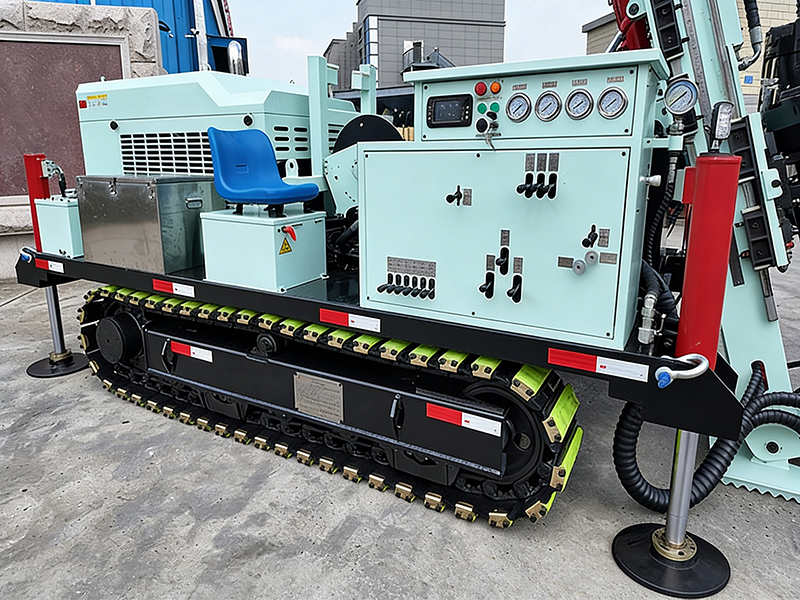
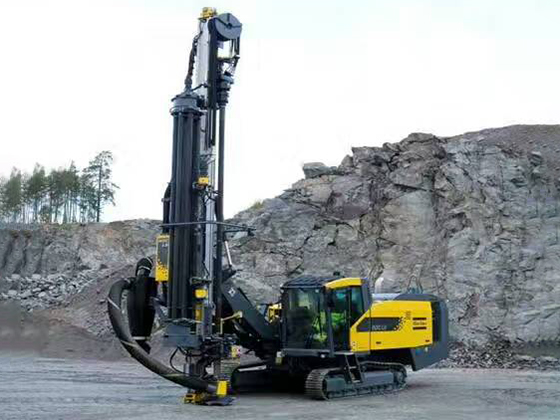
The core working principle of a down-the-hole drill is to use its internal impactor and drill bit to perform high-frequency impact and crushing on rocks, thereby achieving the purpose of drilling. This process involves several key technical considerations:
Rock Hardness at the Working Face: Different types of rocks have different hardnesses. When selecting a down-the-hole drill, it is necessary to match suitable drill bits, drill rods, and impactors according to the specific rock hardness of the construction face to achieve the best crushing effect and drilling efficiency.
Drilling Diameter and Depth Requirements: According to the specific requirements of the engineering design, the down-the-hole drill needs to be equipped with drill bits and drill rods of different diameters and lengths. At the same time, the drill arm and guide rail of the drill itself should have multiple adjustable angles to adapt to different construction environments and drilling direction requirements.
Drill Performance Parameters: Such as rotation speed, output torque, and propulsion axial pressure. These parameters are directly related to the speed, efficiency, and cost of drilling. They need to be reasonably set based on comprehensive factors such as drilling diameter, drill bit structure, impactor working frequency, and the physical properties of the rock.
How to Select a Suitable Down-the-hole Drill
Selecting a suitable down-the-hole drill requires comprehensive consideration of multiple factors to ensure that it meets engineering needs and achieves the best return on investment:
1. Production Applicability: The primary consideration is whether the drill can meet the specific needs of current and future engineering construction. The model and performance of the drill should be reasonably configured according to the types, scales, and geological conditions of the construction tasks usually undertaken by the enterprise.
2. Technical Advancement: On the premise of meeting basic production needs, attention should be paid to the technical advancement of the drill. Choosing equipment with relatively advanced performance indicators helps to extend its technical service life, improve production efficiency, and adapt to more complex construction challenges in the future.
3. Operability and Maintainability: The operation of the equipment should be as simple and intuitive as possible, so that workers can quickly master the operation skills and reduce misoperation. At the same time, the drill structure should be reasonably designed to facilitate daily maintenance and troubleshooting, and the accessories should have strong versatility to reduce maintenance costs and downtime.
4. Safety and Environmental Performance: Safe production is the top priority. Drills with qualified manufacturing materials and complete safety protection devices should be selected. At the same time, attention should be paid to whether the working noise, exhaust gas, and waste emissions during construction meet the environmental protection regulations of the state and localities.
5. Economic Rationality: When purchasing equipment, not only the initial purchase price should be considered, but also the energy consumption, maintenance costs, and expected output benefits during the entire service life should be comprehensively evaluated, striving for a shorter investment payback period and the best overall economic benefits.
In addition, the efficient operation of down-the-hole drills is inseparable from the support of supporting air compressors. When selecting a down-the-hole drill, it is also necessary to comprehensively consider the technical indicators and economy of the air compressors used with it to ensure that the entire drilling system can work coordinately and efficiently, so as to achieve the best drilling efficiency and cost control.
Conclusion
As a key equipment in engineering construction, the performance and selection of down-the-hole drills directly affect the progress, quality, and cost of the project. By understanding its application fields, working principles, and selection points, engineering builders can more targeted select suitable down-the-hole drills, thereby achieving twice the result with half the effort in various complex rock drilling operations. In the future, with the continuous progress of technology, down-the-hole drills will develop towards more efficient, intelligent, and environmentally friendly directions, contributing more to China's infrastructure construction."