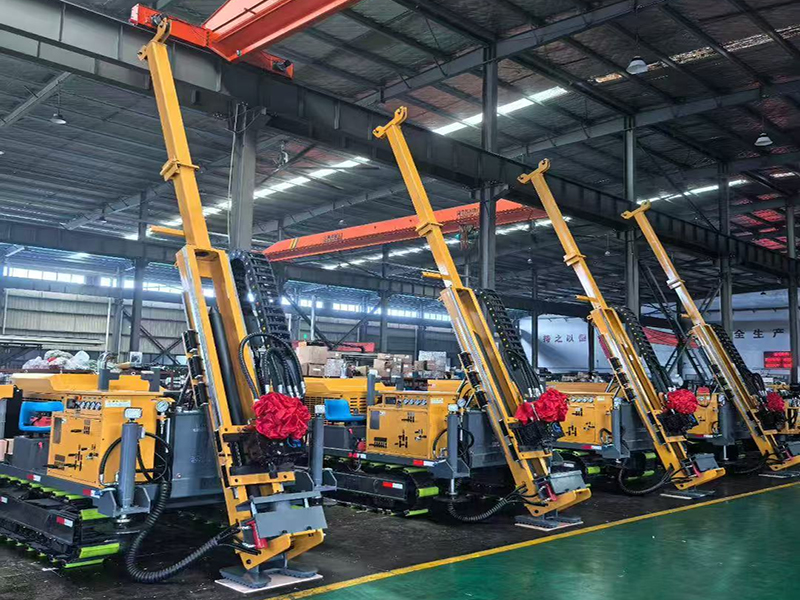
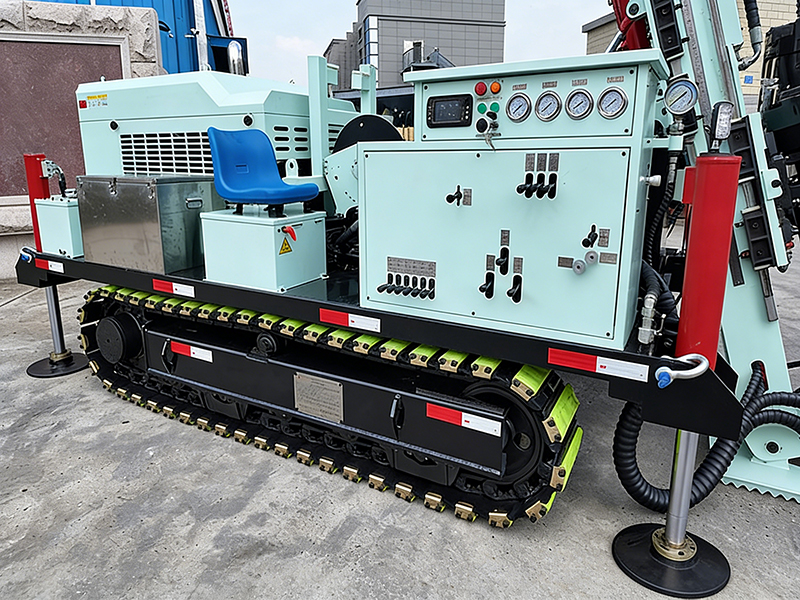
Exploration Drilling Rigs: Key Equipment For Geological And Engineering Surveys
Release time:2026-04-24
Visits:335
In fields such as geological exploration, engineering geological investigation, and mineral resource prospecting, exploration drilling rigs play an indispensable role. These specialized equipment help us obtain valuable underground geological information, geotechnical samples, and other key data by drilling into soil and rock, providing a solid scientific basis for the planning, design, and implementation of engineering projects. Exploration drilling rigs come in a rich variety of types, which can be subdivided into multiple categories according to different application scenarios and specific functional requirements. This article will detail several common types of exploration drilling rigs to help you better understand their characteristics and applicable scopes.
Main Types of Exploration Drilling Rigs
1. Rotary Drilling Rigs
Rotary drilling rigs are currently one of the widely used exploration equipment. Their working principle is to use drill pipes to carry the drill bit and drive the drill pipes to rotate for cutting or grinding the formation through a motor. This type of drilling rig is usually suitable for shallow geological exploration and geotechnical engineering investigation projects. The significant advantages of rotary drilling rigs include the ability to reach greater drilling depths, relatively fast drilling speed, and effective maintenance of the integrity of core samples while obtaining them, reducing damage.
2. Percussion Drilling Rigs
Percussion drilling rigs rely on impactors controlled by pneumatic, hydraulic, or electric power to apply periodic impact force to the drill bit, thereby breaking rock formations or other hard materials. It is particularly suitable for detection and sampling work in geological conditions with high hardness such as rock and concrete. The characteristic of percussion drilling rigs is that the drill bit has a large feed force. Although its power is slightly smaller than that of rotary drilling rigs, it has a wider adaptability to complex formations.
3. In-Situ Drilling Rigs
In-situ drilling rigs, as the name suggests, focus more on conducting detailed investigations of specific formations in situ. It is suitable for exploration work in shallow soil layers and weak rock formations. Its working method usually involves lowering steel casings through ground drilling to ensure that the drilling pipes remain upright and stable during the drilling process. This type of drilling rig has important applications in testing dynamic and static parameters, determining soil density, and investigating hydrogeological conditions.
4. Core Drilling Rigs
Core drilling rigs are specifically designed to drill into underground rocks and obtain complete cores. Through the complete cores obtained by drilling, geologists can in-depth analyze key information such as underground geological structures, rock composition characteristics, and mineral distribution. Core drilling rigs can usually be divided into non-pipe auger type and pipe core drilling rigs according to their structure and applicable rock formation thickness, targeting different geological conditions and exploration needs respectively.
How to Choose the Right Exploration Drilling Rig
Choosing the most suitable
exploration drilling rig requires comprehensive consideration of multiple factors. The first is **specific formation characteristics**, such as soil type, rock hardness and integrity, which directly determine the drilling method and capability of the drilling rig. Secondly, **exploration purpose**, clarifying whether it is to obtain geotechnical samples, conduct in-situ testing, or measure hydrological parameters, which will affect the focus on the functions of the drilling rig. In addition, **project budget** is also an unavoidable factor. It is necessary to choose the most cost-effective equipment solution on the premise of meeting the exploration needs.
The Importance of Safe Operation
Regardless of the type of exploration drilling rig chosen, the safety of operators is always the primary consideration. All operators must receive systematic safety training, be familiar with the operating procedures and potential risks of the equipment, and possess qualified operating qualifications and corresponding skills. Strictly abiding by safety regulations can not only ensure the personal safety of operators but also guarantee the smooth progress of exploration work and the accuracy of data.
In conclusion, exploration drilling rigs are important tools for exploring the underground world in the geological and engineering fields. Understanding the characteristics and applications of different types of exploration drilling rigs, making scientific choices based on actual needs, and always putting safe operation first are the keys to successfully completing various exploration tasks."