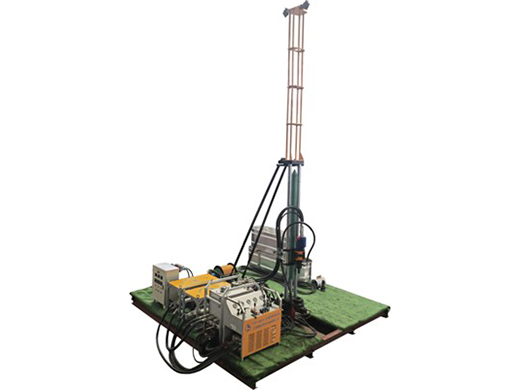
Drilling rig equipment is an indispensable key tool in modern engineering construction and resource exploration. They are specialized mechanical devices used for drilling holes on the surface, with a wide range of applications covering the drilling of water wells, oil wells, natural gas wells, as well as geological exploration, mineral resource development, construction foundation construction, and other important fields. Understanding the basic concepts, classification methods, and core components of drilling rig equipment is crucial for selecting appropriate equipment and ensuring construction efficiency and safety.
I. Definition and Wide Applications of Drilling Rig Equipment
Simply put, drilling rig equipment is a mechanical device used to drill holes in the formation. These holes may be used for extracting groundwater resources (water wells), exploiting oil and natural gas (oil wells, natural gas wells), or for geological surveys, mineral exploration, engineering geological investigation, foundation treatment, environmental monitoring, etc. From urban construction to energy development, from scientific research to infrastructure construction, drilling rig equipment plays a vital role.
II. Main Classification Methods of Drilling Rig Equipment
The diversity of drilling rig equipment enables it to adapt to different geological conditions and operational requirements. Common classification criteria include:
1. Classification by Drive Method:
Mechanical Drills: Rely on their own equipped engines (usually diesel engines) for power.
Electric Drills: Main working components are driven by electricity, with on-site power usually coming from internal combustion generator sets.
Hydraulic Drills: Use hydraulic power as the driving force.
Pneumatic Drills: Use compressed air as the power source.
Steam-Powered Drills: Once used steam engines and pumps for driving, but have been largely phased out since the 20th century.
2. Classification by Drill Pipe/Steel Pipe Type:
Cable Drills: Use steel cables to complete the lifting and lowering of drill pipes.
Traditional Drills: Use various metal or plastic drill pipes for operation.
Coiled Tubing Drills: Equipped with large continuous coiled tubing and downhole drilling motors, suitable for specific operational scenarios.
3. Classification by Mast Length:
Single Drill Pipe: Can only lift or lower a single drill pipe per operation.
Double Drill Pipe: Can lift or lower a stand composed of two drill pipes simultaneously.
Triple Drill Pipe: Can lift or lower a stand composed of three drill pipes.
Quadruple Drill Pipe: Can lift or lower a stand composed of four drill pipes, which usually improves operational efficiency.
4. Classification by Rotation and Drilling Method:
Non-Rotary Drills: Such as direct push drills and most service rigs, whose drill pipes do not perform rotational drilling.
Rotary Table Drills: Drive the entire drill string to rotate and drill by rotating the kelly.
Top Drive Drills: Equipped with a drive motor at the top of the drill pipe string, which can move up and down along the vertical track of the derrick to achieve rotation and circulation operations.
Sonic Drills: Usually use high-frequency vibration energy to drive the drill pipe for drilling.
Hammer Drills: Combine both rotational and impact forces to break rock and drive the drill pipe forward.
5. Classification by Derrick Position:
Traditional Drills: Adopt a vertically placed derrick.
Inclined Drills: The derrick is inclined at a certain angle (e.g., 45 degrees), mainly used for directional drilling operations.
6. Classification by Drilling Purpose or Type:
Cuttings Drilling:
Drill pipes enter the borehole in different ways, selected based on factors such as drilling depth, sampling type, cost-effectiveness, and drilling speed, each with its own applicable advantages and limitations.
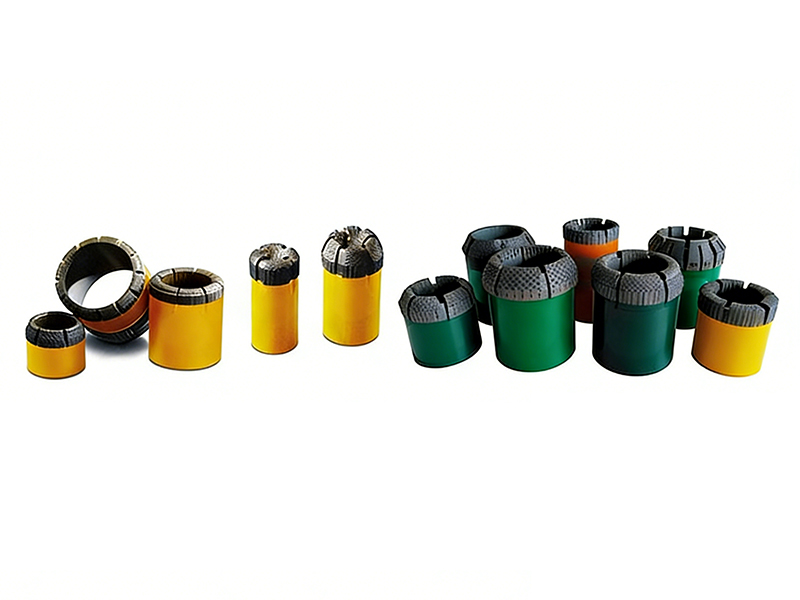
Core Drilling: Commonly used to obtain underground core samples, such as the diamonds used in manufacturing diamond drills, which come in various sizes, generally from fine to ultra-fine grades.
III. Core Components of Drilling Rig Equipment
A complete drilling rig equipment is composed of multiple key systems and components working together, mainly including:
Blowout Preventer (BOP): A key safety device used to prevent accidental spillage of downhole fluids and gases to the surface during drilling.
Centrifuge: Uses the principle of centrifugal force to separate solid particles such as sand from drilling fluid.
Solids Control Equipment: A set of equipment for preparing, processing, and recycling drilling mud (drilling fluid).
Chain Tong: A special wrench with a locking device, used for tightening or loosening drill pipe joints.
Degasser: Used to separate entrained air and natural gas from drilling mud to ensure drilling fluid performance and operational safety.
Desander and Desilter: Usually contain a series of hydrocyclones, used to separate sand and mud particles from drilling fluid respectively.
Drawworks: Lifts and lowers the traveling block and connected drilling tools by retracting and releasing the wire rope.
Drill Bit: Installed at the end of the drill string, directly used to break rock and form the borehole.
Drill Pipe: A hollow steel pipe used to connect the bottom hole assembly (BHA) with surface equipment and serve as a channel for drilling fluid circulation.
Elevator: A device used to grip the drill pipe or casing for lifting or lowering operations.
Downhole Motor: A hydraulically driven device installed above the drill bit, capable of independently driving the drill bit to rotate, commonly used in directional drilling.
Mud Pump: Responsible for pumping drilling fluid from the surface into the well and achieving circulation.
Mud Pit: A pool used for storing, mixing, and precipitating drilling fluid.
Rotary Table: Installed in the center of the drill floor, used to rotate the drill pipe and downhole tools.
Shale Shaker: After drilling fluid returns to the surface from downhole, it first passes through the shale shaker to separate out larger cuttings.
IV. Development Trends of Drilling Rig Equipment
With the continuous advancement of science and technology, drilling rig equipment is also continuously developing towards high efficiency, intelligence, safety, and environmental protection. The application of new materials, the integration of automated control technology, the popularization of remote monitoring and diagnostic systems, and the emphasis on the impact on the operating environment are all promoting continuous innovation of drilling rig equipment to meet increasingly complex engineering needs and higher industry standards.
Summary
As the ""pioneer"" of resource development and engineering construction, drilling rig equipment has a wide variety, complex structure, and extensive applications. Understanding its classification, core components, and working principles helps to better select and use these powerful tools. From traditional mechanical drive to modern intelligent control, the development of drilling rig equipment has always been closely linked to the pace of human exploration of nature and utilization of resources, and will definitely play an irreplaceable role in more fields in the future."